
Starting a business used to mean renting a storefront, stocking inventory, and hoping foot traffic showed up. In 2026, the playbook looks completely different. You can launch a brand, build an audience, and start making money from your laptop before lunch. But choosing where to set up shop? That part still trips people up.
The online platform you pick will shape everything from how fast you get your first sale to how much you actually keep from it. Some are built for speed. Others are built for scale. A few try to do both. This guide breaks down the best options for launching and monetizing a new business this year.
What Actually Matters When Choosing an Online Platform
Before jumping into the list, you should know what separates a great online platform from a mediocre one. The flashy homepage does not matter. What matters is whether it helps you make money without getting in your way.
Here is what to look for:
Speed to launch
Can you go from zero to accepting payments in a single afternoon? Some platforms require weeks of setup, custom development, and theme configuration. Others let you publish and sell within minutes.
Monetization flexibility
Can you sell a subscription, a one-time product, and a community membership all from the same dashboard? Or do you need three different tools duct taped together?
Fee structure
Transaction fees, monthly fees, and hidden charges for payment processing. These eat into your margins fast, especially early on when every dollar counts.
Built-in audience
Does the online platform have its own marketplace where buyers can discover you? Or are you completely on your own when it comes to traffic?
Scalability
What works at 50 customers per month needs to still work at 5,000.
The Best Online Platforms to Launch in 2026
1. Shopify
Shopify is still the heavyweight champion of e-commerce. If you are selling physical products, this is probably where you start. The app ecosystem is massive, the checkout experience is world-class, and the brand recognition alone gives your store credibility from day one.
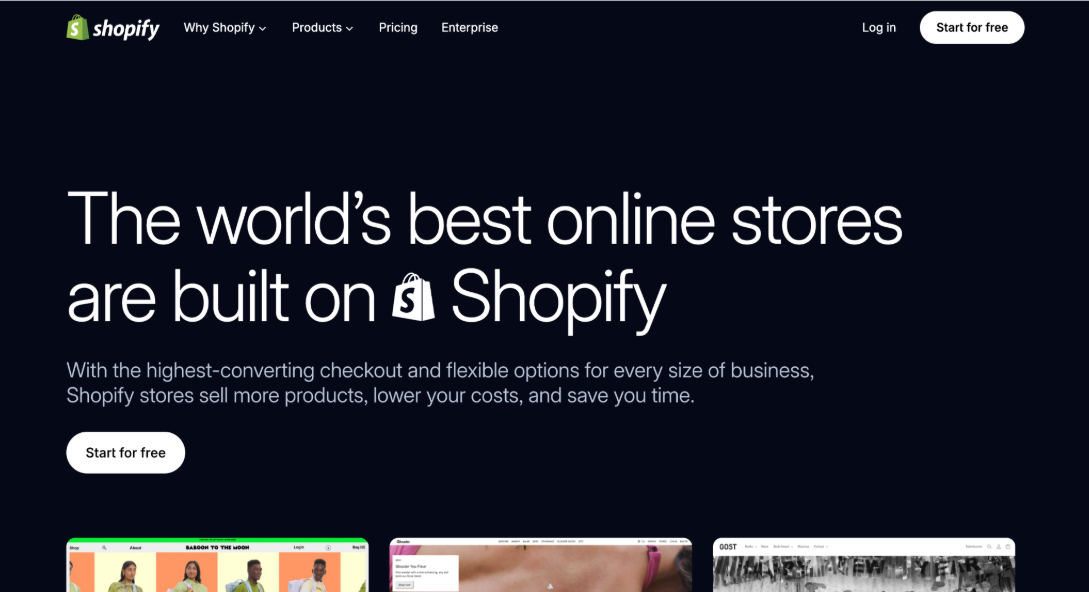
What makes Shopify stand out in 2026 is its continued push into AI-powered tools. Shopify Magic now helps with product descriptions, customer emails, and even storefront design. The new Shopify Collective feature also lets you sell other brands’ products without holding inventory.
The downside? Monthly plans start at $39, and once you factor in premium themes, apps, and transaction fees (unless you use Shopify Payments), costs add up quickly. It is built primarily for product-based businesses, so if you are selling services, digital content, or memberships, you will need third-party apps to fill the gaps.
2. Stripe
Stripe is not a storefront. It is the payment infrastructure that powers a huge chunk of the internet. If you are a developer or building a SaaS product, Stripe gives you the most flexible payment processing available. Subscriptions, one-time payments, usage-based billing, invoicing, and everything in between.
In 2026, Stripe expanded beyond pure payments with Stripe Atlas (company incorporation), Stripe Issuing (custom cards), and their revamped Revenue Recognition tools. For technically minded founders who want full control over their payment stack, nothing competes.
The catch is that Stripe requires development resources. You are not going to sign up and start selling in 20 minutes unless you are comfortable writing code or using a no-code tool that integrates with it.
3. Whop
Whop started getting serious attention from creators and digital entrepreneurs a few years ago, but in 2026, it has evolved into something much broader. This online platform now hosts everything from solo creators selling courses to full-scale companies running their entire business through it. Influencers, software companies, trading groups, fitness brands, and media companies all operate on Whop.
What makes Whop different is how much it consolidates. You can sell subscriptions, digital products, community access, software licenses, coaching sessions, and even physical products, all from a single storefront. There is no need to stitch together five different SaaS tools. The built-in marketplace is another big differentiator. Whop has its own discovery ecosystem where new customers can find you organically, which is something most platforms simply do not offer.
Pricing is straightforward. Whop takes a percentage of sales, so you are not paying monthly fees before you have made a dime. For anyone building a business around content, community, or recurring revenue, it is one of the most versatile options available right now.
4. Gumroad
Gumroad has been a favorite among indie creators for years, and for good reason. It is dead simple. You upload a product, set a price, share the link, and start selling. No website needed, no complicated setup, no learning curve.
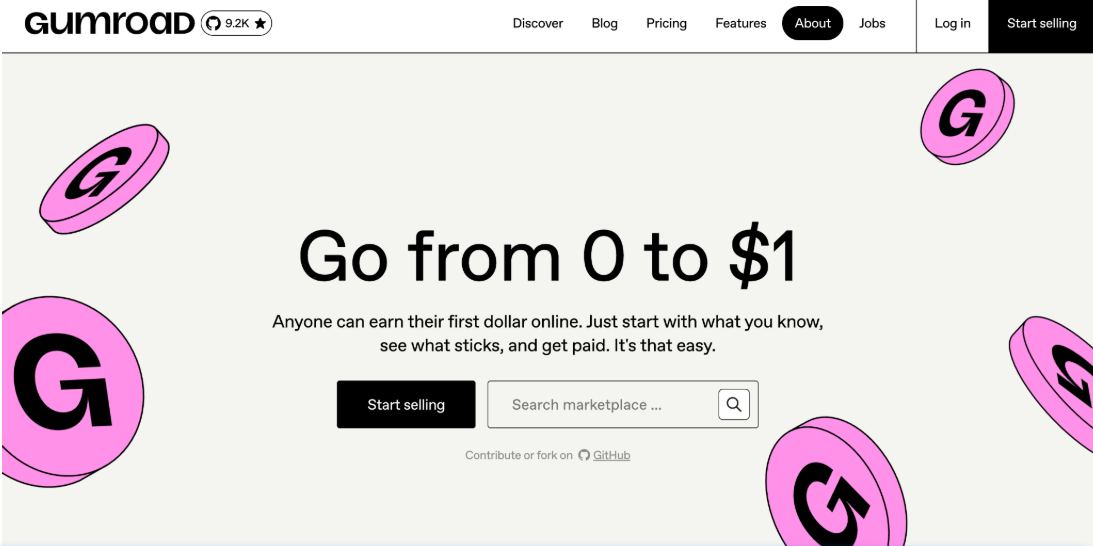
In 2026, Gumroad still serves that niche well. If you are selling ebooks, templates, design assets, or small digital products, it is a clean and fast way to get started. The platform also supports memberships and email collection.
The limitation is growth. Gumroad’s flat 10% fee on every sale (as of their current pricing model) is steep compared to alternatives once your volume increases. And the feature set stays relatively basic. You will not find advanced community tools, app integrations, or analytics dashboards here.
5. WordPress + WooCommerce
If you want total control over your online business, WordPress paired with WooCommerce is the ultimate DIY option. You own everything. Your site, your data, your customer list, your design. No online platform can shut you down or change the rules overnight.
WooCommerce powers over 36% of all online stores, and the plugin ecosystem means you can build almost anything. Subscriptions, digital downloads, bookings, courses, and marketplaces are all possible with the right extensions.
The trade-off is maintenance. You are responsible for hosting, security, updates, and troubleshooting. For a first-time founder who just wants to start making sales, the learning curve can be a real obstacle.
6. Kajabi
Kajabi positions itself as the all-in-one online platform for knowledge entrepreneurs. If you are building a business around online courses, coaching, or digital education, Kajabi bundles everything you need: course hosting, email marketing, landing pages, payment processing, and a basic community feature.
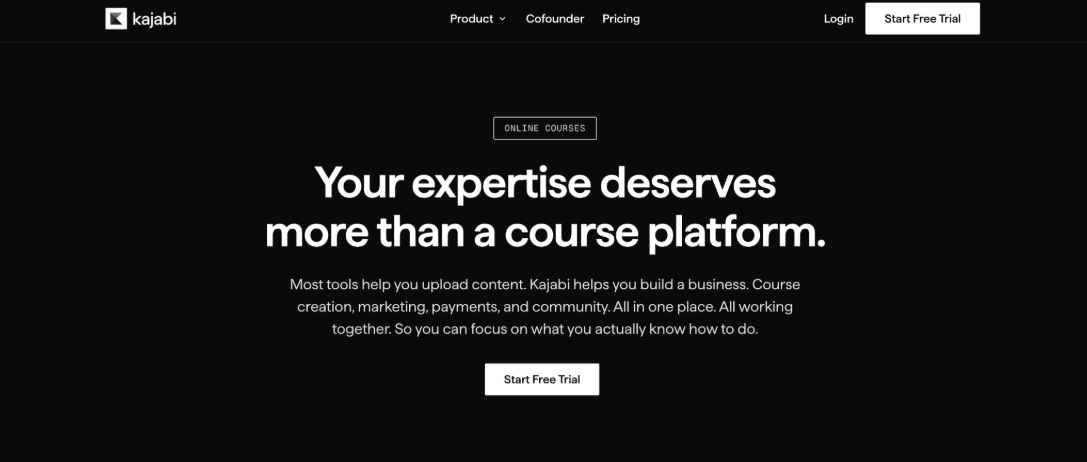
The platform looks polished, and the templates are professional. For someone who wants to launch a course-based business without hiring a developer, it checks a lot of boxes.
The biggest barrier is price. Kajabi’s plans start at $149 per month, making it one of the most expensive options on this list. If you are just starting out and have not validated your idea yet, that is a significant commitment.
Online platform Comparison at a Glance
Here is how these online platforms stack up across the features that matter most.
| Platform | Setup Speed | Monthly Fee | Marketplace | Flexibility | Best For | Scalability |
| Shopify | Moderate | From $39 | Yes (Shop app) | High | Physical Products | Excellent |
| Stripe | Slow (Dev needed) | Pay per use | No | Very High | SaaS / Dev Teams | Excellent |
| Whop | Very Fast | No monthly fee | Yes (Built in) | Very High | Any Business Type | Excellent |
| Gumroad | Very Fast | No monthly fee | Yes (Limited) | Low | Indie Creators | Moderate |
| WooCommerce | Slow (DIY) | Hosting costs | No | Unlimited | DIY Builders | Depends on setup |
| Kajabi | Moderate | From $149 | No | Moderate | Course Creators | Good |
How to Decide? A Quick Framework
Picking the right platform comes down to three questions.
What are you selling?
If it is physical products, Shopify is hard to beat. If it is a mix of digital and community-driven offerings, Whop gives you the most flexibility without monthly overhead. If you are building SaaS, Stripe’s infrastructure is unmatched.
How technical are you?
Online platforms like WooCommerce and Stripe assume you either know code or are willing to learn. Shopify, Whop, Gumroad, and Kajabi are designed so you can get up and running without touching a line of code.
What is your budget?
If you have not made your first dollar yet, paying $149 a month for Kajabi or $79 a month for Shopify’s mid-tier plan does not make a lot of sense. Platforms that only charge when you make a sale reduce your risk significantly in the early stages.
4 Mistakes to Avoid When Choosing a Platform
- Over-engineering your setup. You do not need a custom WordPress site with 14 plugins to sell your first product. Start simple, validate the idea, then scale the tech.
- Ignoring fees at scale. A 10% transaction fee feels harmless at $500 per month in revenue. At $50,000 per month, you are giving away $5,000. Always model out what your costs look like at 10x your current revenue.
- Choosing based on hype. Every year, a new platform gets hyped as the next big thing. Ignore the noise. Choose based on what your specific business needs today and what it will need in 12 months.
- Not considering discoverability. Building on a platform with a built in marketplace means customers can find you without you spending a cent on ads. That advantage compounds over time.
Final Thoughts
The right choice depends on what you are selling, how hands-on you want to be with the technical side, and how much you can invest upfront. What has changed in 2026 is that the gap between starting a business idea and making your first sale has never been smaller. These platforms have removed almost every barrier to entry.
The real competitive advantage is not which platform you choose. It is how quickly you launch, how well you serve your customers, and how fast you iterate. Pick the platform that gets out of your way and lets you focus on building something people want to pay for.
FAQs
Can you really launch a business on one of these online platforms with no technical skills?
Absolutely. Platforms like Shopify, Whop, Gumroad, and Kajabi are designed specifically for non-technical users. You can set up a storefront, add products, configure payments, and start selling without writing any code. The only ones on this list that require development knowledge are Stripe (for custom integrations) and WooCommerce (for setup and ongoing maintenance).
Which online platform has the lowest fees for someone just starting out?
Whop and Gumroad both operate on a no monthly fee model, meaning you only pay when you make a sale. This is ideal for early stage businesses that do not want to commit to monthly expenses before validating their idea. Stripe also has no monthly fee but charges per transaction and requires a developer to set up. Shopify and Kajabi both have monthly subscription costs regardless of revenue.
Is it possible to switch online platforms later if my business outgrows the one I start with?
Yes, but it is easier with some online platforms than others. Most of them allow you to export your customer data and product information. However, switching involves rebuilding your storefront, redirecting links, and potentially losing SEO equity you have built. The best approach is to pick an online platform that can grow with you. Look for flexible pricing, multiple monetization options, and strong integrations so you do not hit a ceiling in year two.